Presence was a per-user refcount in Redis, decremented only when a
connection's cleanup ran. Anything that ended a connection without
cleanup (a crash, an unclean restart, a laptop asleep with the page
frozen) leaked its count forever, so those users never showed offline.
Production had 19 counts for 2 live connections.

Presence is now one expiring entry per connection (90s TTL) for global,
per-room and focus presence, in new presence:v2:* keys. Clients renew
theirs by sending any frame, which the existing 30s ping/pong already
does. The server closes a human connection that sends nothing for 90s
(code 4408), which catches a frozen page whose browser still answers
transport pings. Bot connections can't be expected to answer pings, so
the server renews theirs itself while the handler is alive.

An expiry has no disconnect event to announce it, so a sweeper on each
worker (one per 15s overall, via a Redis lock) prunes expired entries
and broadcasts the offline transition. The old presence:* hashes are
deleted at startup.

Tests cover the expiry store, the sweeper, and the websocket cases.

Co-Authored-By: Claude Sonnet 5.5 <noreply@anthropic.com>
The previous fix hardened listen() against a single bad message, but a
connection-level failure (Redis restarting, a network blip) raises from
the async-for iteration itself, outside that guard, and killed the
task permanently and silently -- HTTP/REST and login kept working fine
since neither touches it, but live message delivery was gone for every
room and every user on the affected process until a manual restart.

Confirmed live in production after an OS update restarted Redis:
PUBSUB NUMPAT showed zero pattern subscriptions across all 4 gunicorn
workers, meaning every one of them had lost its listener with nothing
to bring it back.

Broadcaster.run_forever() now supervises listen(), restarting it with
exponential backoff (capped at 30s, reset after a stable 60s+ run) on
any failure, while still letting a genuine shutdown (task
cancellation) propagate immediately instead of being treated as just
another retry.

Co-Authored-By: Claude Sonnet 5 <noreply@anthropic.com>
Messages could silently stop arriving until a room switch happened to
paper over it with a REST refetch. Root cause: a connection that dies
without a clean close (laptop sleep, an idle connection recycled by a
proxy/NAT) looks identical to a healthy-but-quiet one -- readyState
stays OPEN, onclose never fires, so the already-correct reconnect and
rejoin logic never runs.

The backend now pings every 30s and the frontend force-closes the
socket if nothing (any frame, not just a pong) arrives within 65s,
routing straight through the existing reconnect/rejoin path instead of
needing separate recovery logic.

Also found and fixed a more severe adjacent bug while tracing this:
ConnectionManager.broadcast()/send_to_user() had no per-socket error
handling, so one dead or racing socket could raise inside the app's
single, never-restarted Redis pubsub listener task and silently kill
live delivery for every room and every user on that process until
restart. Now caught and logged per-socket instead of propagating.

Co-Authored-By: Claude Sonnet 5 <noreply@anthropic.com>
Switches to a date-based version scheme (YYYY.M.D, with .2/.3/etc.
appended for additional same-day releases) instead of semver.

Co-Authored-By: Claude Sonnet 5 <noreply@anthropic.com>
The #72 welcome message was attributed to whichever admin added the
member, since there was no system/bot sender concept -- every Message
row requires a real user_id. Adds a lazily-created "system" bot
account (reusing the existing is_bot infrastructure) and switches the
welcome message to post as it instead. Excluded from the People
directory and @mention autocomplete for free: the directory already
filters is_bot users, and mention suggestions are sourced from room
membership, which the system account is never added to.

Co-Authored-By: Claude Sonnet 5 <noreply@anthropic.com>
Attributed to the admin doing the adding rather than a new system/bot
sender concept, since every message today requires a real user_id and
the admin is already a real, in-scope user for the request. Broadcasts
room_added before the welcome message itself, so the new member's
client learns the room exists before it sees an unread update for it.

Co-Authored-By: Claude Sonnet 5 <noreply@anthropic.com>
Text was too small on high-DPI screens with no in-app fix beyond
browser zoom. Adds a text-size setting (scales the whole app via a
root font-size percentage), auto-large rendering for emoji-only
messages, and an independent emoji-size preference that also scales
reaction pills without affecting the emoji picker's fixed-size grid.

Co-Authored-By: Claude Sonnet 5 <noreply@anthropic.com>
Re-posting a URL whose title/content had genuinely changed kept
showing the stale first-fetch preview for up to a week. 5 minutes is
effectively "always fresh" for any realistic re-share cadence, while
still collapsing a burst of near-simultaneous fetches of the same URL
into one and not re-hammering a URL that just failed.

Co-Authored-By: Claude Sonnet 5 <noreply@anthropic.com>
Version bump in both pyproject.toml and package.json. Documentation
update covers everything shipped since v1.0.0 (direct messages,
message deletion, custom emoji, video attachments, DM/room email
notifications, active sessions, and more), and corrects claims that
had gone stale -- backend/README.md and DEPLOYMENT.md both still said
"no server-side session revocation" and backend/README.md said "no
custom/uploaded emoji," both now false.

Co-Authored-By: Claude Sonnet 5 <noreply@anthropic.com>
The pywebpush version bump alone didn't fix WNS: even the latest
release (2.4.0) has no WNS-specific header handling in its own
source, confirmed by inspecting the installed package directly.
Adds the required X-WNS-Cache-Policy header ourselves via
webpush()'s own headers= param, gated to *.notify.windows.com
endpoints.

Also: subscribeToPush()'s permission request and service-worker-ready
wait had no timeout, so a browser that never settles either (seen
live on a fresh Windows/Edge install -- greyed out, no prompt, no
error) left the toggle stuck forever with no feedback. Both now time
out after 20s with an actionable message instead.

Co-Authored-By: Claude Sonnet 5 <noreply@anthropic.com>
WNS (Windows/Edge push) has required an X-WNS-Cache-Policy header
since April 2024; the production venv was likely still on the old
pywebpush 2.0.x installed when the app was first deployed, which
predates the library's fix. Floored the dependency at 2.4.0 (current
latest) so the next deploy picks it up.

Also logs response body and headers on any non-410/404 push failure,
not just body text -- WNS's own 400s carry their actual reason in a
header, which the old body-only logging would still have missed.

Co-Authored-By: Claude Sonnet 5 <noreply@anthropic.com>
The image-serve endpoint's Cache-Control: max-age=300 let a browser
keep serving an already-cached image for up to 5 minutes after a
delete-and-reupload swapped in a different file under the same
shortcode URL. Switched to no-cache, which forces revalidation on
every use -- still cheap, since FileResponse's own ETag/Last-Modified
make an unchanged file a 304, not a full re-transfer.

Co-Authored-By: Claude Sonnet 5 <noreply@anthropic.com>
Site-wide, any user can upload -- usable both as reactions and inline
in message text via :shortcode:, alongside the existing built-in
Unicode picker. A :shortcode: reference is stored/sent as literal
text (same as the built-in shortcode convention) and resolved to an
image at render time, so it degrades to plain text if the emoji is
later deleted.

Backend: new custom_emoji table (shortcode unique, sized to fit
MessageReaction.emoji's existing column alongside its colons), upload/
list/delete endpoints (delete restricted to uploader or site admin).

Frontend: a CustomEmojiProvider context feeds a new "Custom" category
in the emoji picker (inline upload + hover-to-remove), extends the
composer's shortcode autocomplete, and a shared EmojiGlyph resolver
renders custom emoji wherever a value can appear -- message text,
reaction pills, and the picker itself.

Co-Authored-By: Claude Sonnet 5 <noreply@anthropic.com>
Replaces the stateless signed-cookie session (bare user_id) with a
real server-side sessions table -- the cookie now just carries an
opaque session id, resolved against the DB on every request. Each
session records IP address (respects X-Forwarded-For), a parsed
device label, and last-seen time (throttled updates, not written on
every request).

New GET/DELETE /api/auth/sessions endpoints and an "Active sessions"
section in Profile settings let a user see every device they're
logged in from and revoke one they don't recognize -- including their
own current session, which just signs them out.

Co-Authored-By: Claude Sonnet 5 <noreply@anthropic.com>
The previous pass only emailed on a mention. Corrected scope: the
room's first unread message triggers one debounced email (same shape
as #66), and every mention additionally emails regardless of that
debounce, since a mention shouldn't get silently absorbed by an
earlier plain message's already-sent notification.

Co-Authored-By: Claude Sonnet 5 <noreply@anthropic.com>
Lets a member subscribe to email when they're @mentioned in a room
while offline, alongside #66's always-on DM email. Debounced the same
way #66 is (one email per unread burst, not one per mention), and
deliberately scoped to regular rooms only -- DMs already have #66's
automatic offline email with no separate toggle needed.

Co-Authored-By: Claude Sonnet 5 <noreply@anthropic.com>
A video file previously rendered as a generic downloadable file card,
same as any other attachment. The file-serve endpoint forces
Content-Disposition: attachment for every upload as an XSS mitigation
(a same-origin-served .html/.svg executing script), which also meant a
<video> tag pointed at it couldn't play -- the browser would just try
to download it.

Carve out a strict, server-side allowlist (video/mp4, video/webm,
video/ogg -- deliberately not "every video/* type") that skips the
forced download, the same reasoning MessageImage's own endpoint
already relies on: these are content types a browser only ever
interprets as media, never as something that could execute script.
Anything else, including other video formats like .mov, still forces
a download exactly as before.

On the frontend, a video attachment with one of those content types
renders as an inline <video controls> instead of the generic file
card, with a hover-revealed expand button that calls the browser's
native Fullscreen API on the video element directly rather than
building a second lightbox component.

Co-Authored-By: Claude Sonnet 5 <noreply@anthropic.com>
Previously the only way to resend was to re-invite the same email from
scratch, creating a whole new invite row. Adds a "Resend" action next
to Revoke on each pending invite -- rotates the token and refreshes the
7-day expiry on the same row (the old link stops working the moment
it's used, same instinct as a password-reset resend), then re-sends
the invite email.

Co-Authored-By: Claude Sonnet 5 <noreply@anthropic.com>
A live "no emails arriving" report produced literally nothing in the
logs, not even the SMTP-not-configured line -- this app has no logging
config lowering the root level below Python's own WARNING default, so
every .debug()/.info() call has been silently invisible in production
all along. Bumped the SMTP-not-configured line to .warning, and added
one at each early-return in _maybe_email_dm_notification (no other
participant, recipient online, already has unread messages) plus a
confirmation right before actually sending -- next attempt will show
exactly which branch is being hit instead of nothing at all.

Co-Authored-By: Claude Sonnet 5 <noreply@anthropic.com>
Every email went through one shared plain-text-only path. Redesigned
send_email/send_test_email around structured paragraphs + an optional
CTA button instead of one pre-formatted string, and render both a
proper styled HTML card (table-based, inline styles -- email clients
strip <style> blocks and don't support CSS variables) and a clean
plain-text fallback from the same input, sent as multipart/alternative.

The HTML is themed per recipient: an email to an existing user renders
in their own selected theme (dark/light/midnight/sunset, or their saved
custom palette), resolved server-side from User.theme/
active_custom_theme_id. Site invites have no account yet to read a
theme from, so they use the default DarkSingularity palette. All five
existing email triggers (site invite, room-added, password reset,
#66's DM notification, admin test email) updated to the new call shape.

Co-Authored-By: Claude Sonnet 5 <noreply@anthropic.com>
Scoped to direct messages only, and deliberately narrower than the
existing push/desktop "offline" (not connected to this room's channel
right now, which fires on every message) -- email uses GlobalPresence
instead (no open connection anywhere, or appear_offline), since the
other participant could easily just be active in a different room.
Debounced to the first unread message in the conversation rather than
firing on every message in a burst, resetting once they mark it read.
Reuses the existing SMTP/send_email infrastructure from the invite
feature, so it silently no-ops if SMTP isn't configured, same as
everywhere else that already uses it.

Co-Authored-By: Claude Sonnet 5 <noreply@anthropic.com>
Message.deleted_at has existed since the initial schema but was never
wired up -- no WS envelope, no permission check, no frontend concept of
it at all. Soft delete, author-only (mirrors the existing edit
permission exactly): content and any attached image/file are cleared
and the underlying MessageImage/MessageFile row and stored file are
actually removed, not just detached, so the message becomes a "This
message was deleted" tombstone with nothing left to recover through a
stale attachment URL. A deleted message can no longer be edited or
reacted to.

Co-Authored-By: Claude Sonnet 5 <noreply@anthropic.com>
is_archived was previously only exposed on the admin-only AdminRoom
schema and checked in one place (excluding a room from Browse rooms) --
for anyone already a member it was a complete no-op: still in their
sidebar, still fully postable, no indication anywhere it was archived.

Expose is_archived on the regular RoomRead/MyRoomItem schemas, drop
archived rooms from the sidebar list (while keeping them directly
reachable via URL so history stays readable), and reject new messages
in one -- both the WS "message" handler and incoming webhooks -- with a
clear "archived and read-only" response instead of silently no-op'ing
or a confusing membership error.

Co-Authored-By: Claude Sonnet 5 <noreply@anthropic.com>
The sidebar shows every DM's online/offline dot at once, but the only
existing signal for a presence change (member_updated) is broadcast to
a room's own channel, which Presence only delivers to a connection that
currently has that specific room joined -- never true for a DM sitting
unopened in the sidebar. Add a dedicated per-user broadcast
(dm_presence_update) sent to each of a user's DM partners on their own
per-user channel whenever their global online/offline state changes, so
the sidebar dot updates without needing that DM to be the open room.

Co-Authored-By: Claude Sonnet 5 <noreply@anthropic.com>
list_site_invites returned every invite ever sent, so the admin UI's
"Pending invites" section kept showing accepted/revoked rows forever
(just relabeled with a status badge) instead of dropping them. Filter
the query to pending only, and have the revoke action remove its row
from local state immediately instead of leaving a relabeled one behind.

Co-Authored-By: Claude Sonnet 5 <noreply@anthropic.com>
Desktop mode's focus gating (from #49) made losing OS focus send "leave"
for every open room, which stopped live message delivery to that room,
not just notification eligibility -- so a message wouldn't render until
the room was manually left and rejoined. Room join/leave is now gated on
visibility alone, matching the browser; notification eligibility gets its
own separate signal (a "focus"/"blur" WS frame tracked by a new
Redis-backed FocusPresence), so a connected-but-unfocused desktop member
still gets notified without losing live delivery.

Co-Authored-By: Claude Sonnet 5 <noreply@anthropic.com>
Two related fixes:

1. A hidden DM's un-hide-on-new-message path only cleared
   RoomMembership.hidden_at in the DB -- it never told an already-open
   client to refresh. The only existing signal for that room
   (unread_update) does setRooms(prev => prev.map(...)), which is a
   no-op for a room that isn't in `prev` at all -- exactly what a
   hidden DM is. Now broadcasts the same room_added signal a brand new
   DM gets (via UPDATE ... RETURNING to know exactly who was
   un-hidden), reusing the fix already established for that class of
   bug.

2. While debugging #1's test, found the actual root cause behind the
   deploy-blocking migrations from earlier this session: every
   WebSocket connection shares one AsyncSession for its entire
   lifetime, and SQLAlchemy opens a transaction implicitly on first
   use. Nothing ever committed it -- not the initial auth lookup, not
   any of the several read-then-continue branches in the message loop
   (join/message/edit/reaction all check membership this way). A
   connection that's just sitting open (which for a real user can be
   hours) was holding that transaction open the entire time, which is
   exactly what blocked ALTER TABLE twice in production this session
   (confirmed both times via pg_stat_activity -- idle in transaction
   for 30+ minutes on this exact query shape). Now commits once after
   connection setup and once after every frame via a try/finally
   wrapping the whole dispatch, so no exit path (including the many
   `continue`s) can leave a transaction open while idling on the next
   receive_json().

Verified end-to-end in the browser (a hidden DM reappears in an
already-open tab with zero reload when the other person messages
again) and via a new WS-level test reproducing the exact scenario.

Co-Authored-By: Claude Sonnet 5 <noreply@anthropic.com>
Neither participant could get rid of a DM at all -- Leave/Delete were
both deliberately hidden for DMs during the initial build to sidestep
an edge case (removing a membership would break find_or_create_dm's
exactly-two-members assumption), but that left no way out whatsoever.

RoomMembership.hidden_at is a per-viewer display flag, not a
membership deletion: hiding a DM only sets it on your own membership
row, so it disappears from just your sidebar without touching the
other participant's copy or any messages. It's automatically cleared
(reappearing) in two cases: a new message arrives in the room
(broadcast_new_message), or find_or_create_dm resolves back to the
same room because either person re-opens it from the People list --
both count as the conversation being active again.

Also fixes two now-flaky tests (test_message_edit, test_reactions):
broadcast_new_message doing more work before returning shifted timing
enough to expose a pre-existing race where a per-user-channel frame
(desktop_notification/unread_update) could legitimately arrive before
a connection's own "joined" ack. Broadened their existing _recv()
noise-filtering helper (already used for member_updated) to cover
those types too, and used it at the two call sites that were reading
raw receive_json() instead.

Co-Authored-By: Claude Sonnet 5 <noreply@anthropic.com>
start_dm_endpoint created the room and membership correctly but never
sent the room_added signal every other "you're now in a room" path
(add_member) already sends -- without it, GET /rooms/mine is only
fetched once at app mount, so a DM started against an already-open
client stayed completely invisible until a manual reload. The
recipient still got an offline push/desktop notification (that path
is independent, via _notify_offline_members), just nothing to
actually open when they went looking in an already-loaded session.

Added a test mirroring the existing add_member broadcast test exactly
(recipient connected but never joined any room channel, proving the
signal alone is what tells their client the room exists) -- it failed
before this fix and passes now.

Co-Authored-By: Claude Sonnet 5 <noreply@anthropic.com>
A DM is a Room with a new is_dm flag, not a separate model -- reuses
all the membership/message/WS plumbing Room already has instead of
duplicating it. The room's `name` (still required + globally unique)
is an internal, never-displayed token derived deterministically from
the two participants' sorted user IDs (dm_room_name), which makes
find-or-create a single indexed lookup and gets free race-condition
safety from the existing unique constraint -- a concurrent double-
start from both people just hits the same IntegrityError->retry-as-
lookup path create_room already established.

Both participants get the plain 'member' role (no owner/admin
distinction makes sense for a 1:1 DM), which incidentally reuses
every existing role gate to block add-member, room-settings edits,
and join-via-browse on a DM for free. update_room also gets an
explicit is_dm guard independent of that, since renaming a DM isn't
just a privacy concern -- it would silently corrupt the find-or-create
invariant. DMs are excluded from both Browse Rooms and the admin
portal's room listing (fully private, per scope).

GET /api/rooms/mine precomputes each DM's other participant (name,
avatar, presence) as dm_partner in one batched query, so the sidebar
can render a DM row without a fetch per row. Frontend: a new "Direct
Messages" sidebar section (searchable by partner name, not the
internal room name), clicking someone in the People list starts or
resumes a DM, and the chat header/composer/RoomInfoPanel all render
the partner's identity instead of a room name where it's a DM.

Co-Authored-By: Claude Sonnet 5 <noreply@anthropic.com>
delete_room() only ever cleaned up Message and RoomMembership rows,
but none of the FK constraints referencing a room (or its messages)
are declared ON DELETE CASCADE at the DB level -- confirmed across
every migration that added one. Any room that ever had an image/file
attachment, an incoming webhook, an outgoing event subscription, or
was ever #referenced from a message in a *different* room (the one
that originally surfaced this as a message_room_references FK
violation in production) couldn't be deleted at all.

Now explicitly cleans up, in dependency order: message mentions,
reactions, and room-references (both the message-id and room-id
directions), the messages themselves, then room-scoped images/files
(including unlinking the actual stored files after a successful
commit, not just their DB rows) and incoming webhooks/event
subscriptions, before removing memberships and the room.

Added a test reproducing the full scenario -- attachments,
integrations, and a cross-room reference all on one room -- that
would have 500'd before this fix, plus a sanity check that deleting
the room doesn't touch the unrelated room that referenced it.

Co-Authored-By: Claude Sonnet 5 <noreply@anthropic.com>
Shows the app version, links the AGPL-3.0-or-later license text, and
links the source repo -- AGPL's own suggested-usage text recommends
exactly this ("if your software can interact with users remotely...
its interface could display a 'Source' link"), not just a courtesy
credits screen.

Version comes from package.json at build time via a Vite `define`
(__APP_VERSION__), so it can't drift from what's actually released.
License text is served at /LICENSE via a frontend/public/ symlink to
the repo-root LICENSE, the same pattern already used for the user
guide. Also bumps both package manifests to 1.0.0 ahead of tagging
the first release.

Co-Authored-By: Claude Sonnet 5 <noreply@anthropic.com>
Adds the verbatim license text as LICENSE, sets license metadata in
both package manifests, and links it from both README.md files.
Chosen specifically for the network-copyleft clause (AGPL §13): a
modified version run as a hosted service must offer its source to
that service's users, which plain GPL's distribution-only trigger
doesn't cover.

Co-Authored-By: Claude Sonnet 5 <noreply@anthropic.com>
Offline members now also get a desktop_notification WS envelope
alongside the existing Web Push send, since Electron has no push
delivery service configured. The client only acts on it when
window.dsDesktop is present and the user's local preference allows it,
so the server needs no awareness of which clients are Electron.

Co-Authored-By: Claude Sonnet 5 <noreply@anthropic.com>
Mirrors the existing @-mention system's shape: a regex finds #roomname
tokens, extract_referenced_room_ids validates them against rooms the
*sender* actually belongs to (mirrors mentions' "must be a real member"
rule -- referencing a private room the sender isn't in would otherwise
leak its existence), and a MessageRoomReference join row is stored per
match in create_message. No notification/unread layer, unlike mentions --
referencing a room has no "you were referenced" semantics.

Rendering is the same markdown-link rewrite trick MessageContent.tsx
already uses for mentions (#username -> [#username](mention:username)),
but resolved against the *viewer's* own room list (threaded down from
ChatShellPage's room state through ChatPane/MessageList) rather than the
stored server-side reference -- a reference to a room the current viewer
isn't in quietly renders as plain text instead of a link, same as an
@mention of someone outside the room does. The href scheme renders a
real react-router Link instead of mentions' inert span, since a room
reference is meant to be navigable.

mention_service.strip_code_spans (was _strip_code_spans) is now shared
between both extraction paths rather than private to one module.

Co-Authored-By: Claude Sonnet 5 <noreply@anthropic.com>
is_private was previously only settable at room creation. RoomUpdate now
accepts it, update_room() applies it, and PATCH /api/rooms/{id} allows a
site admin to make the change even for a room they haven't joined (in
addition to the existing room owner/admin gate) -- require_room_role
normally 403s a non-member before the role check ever runs, so this is a
deliberate bypass for site admins specifically.

Flipping the flag has no effect on existing members either direction
(confirmed is_private is only ever checked at self-serve join time) --
it purely controls Browse Rooms visibility and future self-joins.

Frontend: RoomInfoPanel's "Room settings" section is now visible to room
owner, room admin, or site admin (was owner-only), with a privacy toggle
reusing NewRoomModal's existing toggle-switch UI. "Delete room" stays
owner-only, now nested inside that wider section rather than gating the
whole thing.

Co-Authored-By: Claude Sonnet 5 <noreply@anthropic.com>
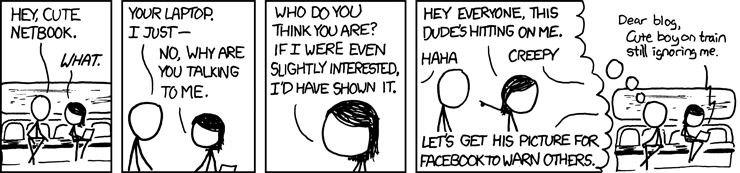
A URL that points straight at an image file (Content-Type: image/*) has
no HTML to scrape Open Graph tags from, so the fetch found nothing and
the message showed no preview at all -- reported against
https://imgs.xkcd.com/comics/creepy.png.

link_preview_service now recognizes an allowed image content-type (same
list storage.py uses for uploads) before falling through to the HTML/og:
path, and returns the URL itself as the preview (LinkPreview.is_image).
No need to download the body -- the already-SSRF-validated URL is the
image. The frontend renders that case as a real expandable image
(message-image + lightbox, same as an actual attachment) instead of the
small title+description card, which would have nothing to show anyway.

Verified end-to-end against the reported URL.

Co-Authored-By: Claude Sonnet 5 <noreply@anthropic.com>
Slack/Discord-style link unfurling: the first http(s) URL in a message's
content gets a small preview card (title/description/image/site name)
fetched from the page's Open Graph tags.

Backend:
- Message.preview_url (extracted at create/edit time, cheap regex, no
  I/O) points at a link_previews cache row keyed by URL -- the same URL
  posted in different messages/rooms fetches once, and a failed fetch is
  cached too so a dead URL isn't retried on every reference.
- The actual fetch runs in a background asyncio.create_task from
  broadcast_new_message/broadcast_message_update, on its own DB session,
  so a slow third-party site never delays message delivery. A separate
  "link_preview" WS envelope carries the result once it resolves.
- SSRF protection reuses app/services/ssrf.py's validate_target_url
  (renamed from UnsafeWebhookUrlError to UnsafeUrlError now that it's
  shared with webhooks), but re-validates before every hop of a redirect
  chain rather than once up front -- redirects are followed manually so
  each intermediate URL is checked before it's ever connected to.
- Parsed with stdlib html.parser -- no new dependency.

Frontend: a LinkPreviewCard rendered under message content when present,
patched into state live via the new WS envelope and included in message
history for reloads.

Co-Authored-By: Claude Sonnet 5 <noreply@anthropic.com>
Root cause, confirmed live against Postgres and reproduced end-to-end
through two real WebSocket connections: ws/chat.py shares one AsyncSession
for a whole connection's lifetime. A read-only action (e.g. a "join"
frame's membership check) can leave a transaction open with nothing to
commit it until the next write. Postgres's now()/CURRENT_TIMESTAMP
returns that transaction's *start* time in that case, not the actual
statement's -- so a reply sent after any idle/reading period got
timestamped to when the idle period started, sorting it before messages
that were genuinely sent earlier. This is independent of the two earlier
#45 fixes (missing ORDER BY tiebreakers, a stale-response race on
reload) -- both were real bugs, but this was the actual mechanism behind
"my message appears before theirs even though theirs was sent first."

Switched Message.created_at and MessageReaction.created_at from
func.now() to func.clock_timestamp(), which always reflects the actual
moment of execution regardless of how long the transaction has been
open. Migration is a plain column-default change -- no table rewrite, no
lock risk, round-trips cleanly.

Co-Authored-By: Claude Sonnet 5 <noreply@anthropic.com>
Two independent gaps, both fixed since the report was ambiguous about
which "chats" meant:

- ChatPane.tsx concatenated history (REST-fetched) and live (WS-pushed)
  without sorting, so anything that could desync receipt order from
  send order -- a rejoin/resync racing a still-in-flight WS message,
  which opening the same room on another device triggers directly via
  a fresh socket connection -- could render messages out of
  chronological order. Now sorted by created_at (stable sort, so
  same-timestamp messages keep their relative order).
- list_member_rooms/list_open_rooms/list_recent_messages ordered by
  created_at alone, with no secondary tiebreaker. Postgres doesn't
  guarantee a stable order for tied rows across separate query
  executions, so two rooms/messages sharing an identical timestamp
  (a real possibility -- rapid sends, bulk-created rooms) could come
  back in a different order on two separate fetches, i.e. two devices.
  Added id as a secondary sort key everywhere this showed up.

Co-Authored-By: Claude Sonnet 5 <noreply@anthropic.com>
Both account-creation surfaces now require the password twice:

- Web signup (invite-based self-service): SignupComplete gains a
  password_confirm field with a model_validator backstop server-side,
  plus a client-side match check in SignupPage.tsx for immediate
  feedback -- the client check is the primary UX, the server check is
  defense in depth so the guarantee doesn't rely on the client alone.
- CLI (python -m app.cli create-user): password is now an optional
  positional argument. If omitted, prompts interactively via getpass
  (hidden input) twice, retrying on mismatch -- matching what "entered
  twice and verified" actually means for a human typing blind. Passing
  the password directly as before still works unchanged, for scripted/
  automated provisioning.

Co-Authored-By: Claude Sonnet 5 <noreply@anthropic.com>
@username tokens in a sent message are parsed against the room's actual
members (skipping fenced/inline code, so pasted code isn't misread) and
recorded as MessageMention rows, reusing #38's read-tracking and
offline-member broadcast infrastructure rather than building a parallel
notification path:

- Sidebar: a mentioned-and-unread room shows a distinct highlight-
  colored badge instead of (not alongside) the plain unread dot --
  computed the same way as has_unread, just scoped to messages that
  mention the caller, and cleared by the same last_read_at mark-read
  flow.
- Push notifications: a mentioned offline recipient gets "X mentioned
  you: ..." instead of the generic "X: ...", still per-recipient since
  the same message can page some room members and not others.
- Message rendering: a validated @username is highlighted inline,
  implemented by turning it into a `[@username](mention:username)` link
  before markdown parsing and overriding link rendering to style
  `mention:`-scheme links as a span instead of an anchor -- reuses
  markdown-to-jsx's existing parser rather than hand-rolling text-node
  splitting.
- Composer: typing @ opens an autocomplete dropdown of matching room
  members (arrow keys to navigate, Enter/Tab/click to insert, Escape or
  moving the cursor away to dismiss).

Co-Authored-By: Claude Sonnet 5 <noreply@anthropic.com>

 ksmithandClaude Sonnet 5.5